Subaru VIN decoder

Free Subaru VIN decoder: lookup windows sticker / build sheet options

Example: jf2shabc4dh446076


Home → Subaru

Each Subaru vehicle is assigned a unique 17-digit number known as a vehicle identification number (VIN). This code, made up of letters and digits, is used by Subaru manufacturers, dealerships, and insurance companies to identify and monitor specific cars. The VIN can be found on the vehicle itself. You can use a Subaru VIN decoder to learn more about the encoded data, including information on the vehicle's manufacture, model, production background, and other features. With the help of this decoder, you can discover more about your individual Subaru. Fun fact: Subaru is a Japanese automaker founded in 1953, known for producing a variety of vehicles including sedans, hatchbacks, and SUVs, as well as its signature all-wheel drive technology.

John - out author and car expert

By John Devn

our car expert

2 minutes read

Updated 2023-04-04

Excellent

star star star star star

Based on 50 reviews

Where to find Subaru VIN number

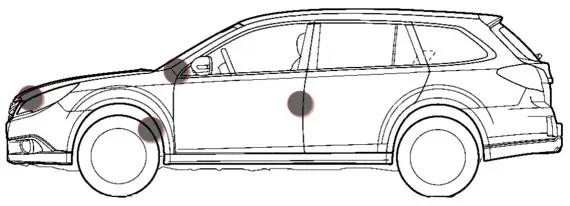
It can be found in several locations, including:

  • On the driver's side door jamb, in the area where the door connects to the car's frame when closed.
  • On the vehicle's driver's side dashboard, right below the windshield. It should be visible from outside through the windshield.
  • The VIN may be engraved on the engine block, typically located near the front of the engine.
  • The VIN may be imprinted on the chassis or frame.
  • The VIN may also be displayed on the transmission.
  • If a vehicle history report is available, the VIN will be listed. This report contains information about the car's ownership, maintenance history, and any previous accidents.
  • The VIN is often cited in documents related to the car, such as the owner's manual.
Where to find Subaru VIN number
Chart option of VIN number

Chart option of VIN number

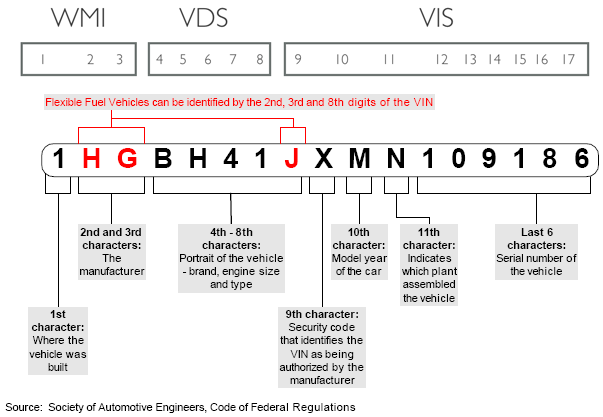
The World Manufacturer Identifier (WMI) is a unique code used to identify the manufacturer of a Subaru vehicle. This code is usually the first three characters found in a VIN and helps to determine the country of origin, manufacturer, and vehicle type. Some examples of WMI codes for Subaru vehicles include:

WMI code Company Location Date
4S3 Subaru-Isuzu of America  USA 1899-12-31
4S4 Subaru-Isuzu of America  USA 1899-12-31
JF1 Fuji Heavy Industries  Japan 1899-12-31
JF2 Fuji Heavy Industries  Japan 2008-11-06
JF3 Fuji Heavy Industries  Japan  2012-12-23
JF4 Fuji Heavy Industries  Japan 2012-12-23
JFB Fuji Heavy Industries  Japan 1899-12-31

The Vehicle Description Section (VDS) is a portion of the VIN that provides specific information about the vehicle's make, body design, powertrain, and transmission. It usually consists of six to seven characters that can be used to identify the car's original configuration and check for any modifications.

The Vehicle Identification Section (VIS) is another part of the VIN that provides specific information about the vehicle, such as the make, body design, powertrain, and transmission. The VIS typically consists of six to eight characters that can be used to identify the vehicle's features, place of manufacture, production order, and model year.

What you can know from VIN decoder tool

The VIN decoder tool can provide the following information:

  • Make, model, and year of the vehicle
  • Engine type and size
  • Transmission type
  • Trim level, options, and packages
  • Vehicle body style and number of doors
  • Manufacturing location of the vehicle
  • Safety equipment and features
  • Production date and sequence number
  • Vehicle color and interior trim
  • Vehicle's fuel efficiency and emissions rating
  • Recall and service bulletins
  • Manufacturer's warranty information
  • Registration and title information

Example of free VIN decoding

The VIN number "JF2GPANC1GH306365" belongs to a 2016 Subaru Crosstrek (2.0i Limited PZEV) wagon.

  • 1st character (J): Indicates the country of origin, which in this case is Japan
  • 2nd character (F): Indicates the manufacturer, which in this case is Subaru
  • 3rd character (2): Identifies the vehicle attributes, such as model type, restraint types, body type, engine, and transmission
  • 4th-8th characters (2GPAN): Identifies the model, which in this case is Crosstrek
  • 9th character (C): Check digit, used to ensure the accuracy of the VIN
  • 10th character (1): Identifies the model year, which in this case is 2016
  • 11th character (G): Identifies the manufacturer's plant code, which in this case is unknown
  • 12th-17th characters (H306365): Identifies the production number, used to identify the specific vehicle within the production run

Using this breakdown of the VIN, we can determine that this is a 2016 Subaru Crosstrek (2.0i Limited PZEV) wagon manufactured by FUJI HEAVY INDUSTRIES U.S.A., INC.

What you can know from VIN history

A vehicle history report, or VHR, can provide additional information about a vehicle's history, including:

  • Past ownership and registration information
  • Accident and damage reports
  • Service and maintenance records
  • Safety recalls and defects
  • Odometer readings and rollback history
  • Salvage or scrap classification
  • Flood or fire damage reports
  • Lemon history
  • Total loss records
  • Emissions test results
  • Title and registration information
  • Plate numbers

Models of Subaru


  • The VIN may have been lost, covered up with paint or another substance, or purposefully removed by the owner or another person attempting to hide the identification of the car.

  • Reach out to the car manufacturer for assistance. They may be able to provide information on obtaining the VIN or have records of it.
  • Contact the car dealership where the vehicle was purchased. They may have information on the VIN or be able to assist in locating it.

All information about Subaru on this page is based on data from:

NHTSA logo

NHTSA

SaferCar logo

SafeCar

NMVTIS logo

NMVTIS

Subaru reliability & resale value


Reliability. RepairPal rates Subaru 3.5 out of 5.0, ranking it 14th out of 32 brands. Average annual repair cost is $617 versus a $652 industry average, with 0.3 repair-shop visits per year (below the 0.4 average). Severity of repairs is slightly above average at 13% versus 12% across all makes. Consumer Reports named Subaru the #1 Overall and #1 Mainstream Brand for reliability in its most recent annual ranking (2024–2025). Source: repairpal.com

Resale & depreciation. iSeeCars analysis shows the Subaru Forester depreciates 28.9% after five years (71.1% resale value), the Crosstrek 28.8% (71.2% resale value), and the Impreza wagon 29.1% (70.9% resale value)—all well above the all-vehicle average of 41.5% depreciation. The Outback depreciates 38.6% over five years per iSeeCars, slightly below the compact-SUV category average of 39.9%. The Subaru Crosstrek was also named top Small SUV in JD Power's 2026 U.S. ALG Residual Value Awards for the third consecutive year. Source: iseecars.com

Theft risk: Subarus are not among the most-stolen vehicles in the United States. IIHS-HLDI data for model years 2022–2024 shows the Subaru Crosstrek 4WD with EyeSight ranked among the lowest whole-vehicle theft claim frequencies of any model, at a relative claim frequency of 9 (vs. an average of 100). NICB's 2024 most-stolen list is led by Hyundai Elantra, Hyundai Sonata, Chevrolet Silverado, Honda Accord, and Kia Optima—no Subaru models appear. Source: iihs.org

Common problems on used Subarus


  • EJ25 head gasket failure — the non-turbo 2.5L engine's original gasket material proves less durable than later designs, leading to external oil/coolant seepage and, in more severe cases, internal mixing. Turbo EJ25s are generally unaffected.Affected: Outback, Legacy, Forester, Impreza (non-turbo EJ25), approx. 1999–2011. Source: carcomplaints.com
  • FB engine excessive oil consumption — FB-series 4-cylinder engines consumed oil at rates well above normal, prompting a class-action lawsuit that resulted in a settlement covering extended warranty repairs and reimbursements.Affected: Forester, Impreza, Crosstrek, Legacy, Outback with FB engines; automatic/CVT variants 2011–2014, manual variants 2011–2015. Source: classlawgroup.com
  • Lineartronic CVT reliability concerns — early CVT units on 2010–2018 models developed bearing failures and shuddering issues. Subaru extended the CVT warranty to 10 years or 100,000 miles on many affected vehicles. Problems are most commonly reported on 2010–2017 Outback, Legacy, Crosstrek, and Forester models.Affected: Outback, Legacy, Forester, Crosstrek with CVT, primarily 2010–2018. Source: aatheshop.com
  • Windshield cracking — owners of 2015–2016 Outback and Legacy reported windshields cracking spontaneously. A class-action lawsuit was filed in 2017 citing NHTSA complaints. A separate settlement covers 2019–2022 Ascent, Forester, Legacy, and Outback for qualifying windshield cracks under an extended warranty program.Affected: 2015–2016 Outback, Legacy (original complaints); 2019–2022 Ascent, Forester, Legacy, Outback (settlement coverage). Source: subaruwindshieldsettlement.com
  • Brake light switch failure — contamination can cause the switch to malfunction, preventing brake lights from illuminating and preventing CVT/automatic transmission from being shifted out of Park. Subject of NHTSA recall.Affected: 2014–2016 Forester, 2008–2016 Impreza (sedan), 2012–2016 Impreza (wagon), 2008–2014 WRX/STI, 2013–2017 Crosstrek. Source: nhtsa.gov
  • Takata passenger airbag inflator rupture — long-term exposure to heat and humidity degrades ammonium-nitrate propellant, causing the inflator to rupture and project metal fragments. Affected Subaru models span 2003–2014 across multiple nameplates.Affected: 2003–2006 Baja; 2009–2013 Forester; 2004–2011 Impreza (incl. WRX/STI); 2003–2014 Legacy; 2003–2014 Outback; 2006–2014 Tribeca; 2012–2014 WRX/STI. Source: nhtsa.gov
  • PCV valve separation — aluminum PCV valve can separate and allow components to enter the engine, causing power loss and potential engine damage.Affected: 2019 Crosstrek, Forester, Ascent. Source: nhtsa.gov
  • Inhibitor switch water intrusion (reverse lights and backup camera inoperative) — an insufficient weld allows water to enter the switch, potentially preventing reverse lights and rearview camera from activating, and in some cases preventing engine start.Affected: 2021 Crosstrek, 2022 Forester, 2021–2023 Legacy and Outback. Source: consumerreports.org

Notable Subaru recalls (NHTSA)


  • NHTSA 16V-358 / 16V-359 / 16V-361Takata passenger-side front airbag inflators containing non-desiccated ammonium nitrate (PSAN) propellant can rupture when deployed after prolonged exposure to heat and humidity, sending metal fragments into the cabin. Part of the industry-wide Takata recall—the largest in automotive history, covering approximately 67 million airbags across 19 manufacturers. Subaru's phased recalls ran from 2014 through 2019. Check VIN at nhtsa.gov/recalls to confirm status.2003–2014 Outback, Legacy, Forester, Impreza (incl. WRX/STI), Baja, Tribeca, WRX/STI (phased by geographic zone and model year). Source: nhtsa.gov
  • NHTSA 22V-907A defective wiring connection in the positive temperature coefficient (PTC) cabin heater can cause the heater to overheat and create a fire risk, even when the vehicle is parked and turned off. NHTSA urged owners to park outdoors and away from structures until repaired. Two fires were reported with no injuries at time of recall issuance.2019–2022 Subaru Ascent (271,694 vehicles). Source: nhtsa.gov
  • NHTSA 23V-755An insufficiently welded inhibitor switch can allow water intrusion, causing the backup camera and reverse warning lights to stop functioning, the gear selector indicator to display incorrectly, and in some cases preventing the engine from starting. Dealers replace the inhibitor switch at no cost.2021 Crosstrek, 2022 Forester, 2021–2023 Legacy, 2021–2022 Outback (95,830 vehicles). Source: nhtsa.gov
  • NHTSA WUE-90 (NHTSA description — brake light switch)Contamination can cause the brake light switch to malfunction, preventing brake lights from illuminating and preventing CVT or automatic-transmission vehicles from shifting out of Park. Increases risk of a crash. Dealers replace the brake light switch free of charge.2014–2016 Forester, 2008–2016 Impreza (sedan), 2012–2016 Impreza (wagon), 2008–2014 WRX/STI, 2013–2017 Crosstrek. Source: nhtsa.gov
  • NHTSA WUW-08 (NHTSA description — PCV valve separation)The aluminum PCV valve can separate, allowing components to enter the engine and causing unexpected loss of power while driving. If separated components cannot be located, the short block engine is replaced under the recall.2019 Crosstrek, Forester, Ascent. Source: nhtsa.gov

What to check when buying a used Subaru


  • Run the VIN through nhtsa.gov/recalls to confirm all Takata airbag recall campaigns (16V-358/359/361 and related) have been completed—many 2003–2014 Subarus still have unresolved airbag repairs.
  • On pre-2012 models with non-turbo EJ25 engine, inspect for head gasket leaks: look for white exhaust smoke, coolant loss without visible leaks, oil in the coolant reservoir, or external seepage around the cylinder head. Ask for documented repair history.
  • On 2011–2015 FB-engine models (Forester, Impreza, Outback, Crosstrek, Legacy), check oil level before a test drive and ask about oil top-up frequency. Consumption above 1 quart per 1,000 miles is abnormal.
  • For any CVT-equipped model (2010 and newer), check whether the extended CVT warranty (10 years/100,000 miles on many units) is still active. Test for shuddering, jerking, or hesitation during acceleration, especially when cold.
  • Confirm brake light switch recall (WUE-90) was completed on 2008–2017 models—failure can prevent brake lights from illuminating.
  • For 2015–2016 Legacy and Outback, and 2019–2022 Ascent, Forester, Legacy, and Outback, check windshield condition and ask whether any windshield replacement history exists (covered under class-action settlement).
  • On 2019–2022 Ascent, verify the PTC heater fire recall (22V-907) has been resolved.
  • Check the AWD system for any variance in tire tread depth—mismatched tires on Subaru's symmetrical AWD can damage the center differential; all four tires should be within 2/32" of each other.
  • Inspect for rust on underbody and brake lines, particularly on vehicles from salt-belt states (subject of a separate NHTSA recall for 2008–2013 models).
  • Request service records showing CVT fluid changes; Subaru recommends replacement every 60,000–100,000 miles and requires only Subaru-approved CVTF.

Subaru — frequently asked questions


Are used Subaru vehicles reliable?
Generally yes, with important model-year caveats. RepairPal rates Subaru 3.5 out of 5.0 (14th of 32 brands), with an average annual repair cost of $617—below the $652 industry average. Consumer Reports ranked Subaru its #1 overall brand for reliability in 2024–2025. However, EJ25-engined models built 1999–2011 carry a well-documented head gasket weakness, and FB-engine models from 2011–2015 settled a class-action over excessive oil consumption. Post-2015 models are generally more reliable, though CVT concerns persist in 2010–2018 production.
What are the most common problems with used Subarus?
The three most-reported issues on CarComplaints.com for Subaru are all oil-consumption related—high oil consumption in the 2014 Forester, excessive oil consumption in the 2011 Forester, and excessive oil consumption in the 2013 Outback—reflecting the FB-engine problem that led to a class-action settlement. On older models (1999–2011), non-turbo EJ25 head gasket failure is the dominant concern. CVT shuddering and slippage on 2010–2018 models is the third major category. Additionally, windshield cracking on 2015–2016 Legacy/Outback and 2019–2022 Outback/Forester/Ascent/Legacy was serious enough to prompt class-action settlements.
Do Subarus hold their value?
Yes, Subarus hold value better than most brands. According to iSeeCars analysis, the Forester depreciates only 28.9% over five years (71.1% retained), the Crosstrek 28.8%, and the Impreza wagon 29.1%—all well below the all-vehicle average depreciation of 41.5%. The Subaru Crosstrek was named top Small SUV in JD Power's 2026 U.S. ALG Residual Value Awards for the third consecutive year. Strong AWD demand, a loyal owner base, and Subaru's platform consistency all support resale.
How do I check a Subaru for open recalls?
Enter the vehicle's 17-digit VIN at nhtsa.gov/recalls—NHTSA's free official recall lookup—to see all open federal safety recalls, including any unresolved Takata airbag campaigns. You can also check on Subaru of America's owner portal at subaru.com. Checking by VIN is the only reliable method; recall status is vehicle-specific based on production date and whether prior repairs were completed.
What should I look for when buying a used Subaru?
Prioritize these checks: (1) Run the VIN on nhtsa.gov/recalls to confirm Takata airbag recall completion—affecting 2003–2014 Legacy, Outback, Forester, Impreza, Baja, Tribeca, and WRX/STI. (2) On EJ25 models (1999–2011 non-turbo), inspect for head gasket leaks: coolant loss, white exhaust smoke, or oil-contaminated coolant. (3) On 2011–2015 FB-engine models, check oil level and consumption history. (4) Test the CVT on 2010–2018 models for shuddering or hesitation; verify extended warranty coverage. (5) Check all four tires for even tread wear—mismatched tires can damage the AWD center differential. (6) Inspect windshield on 2015–2016 Legacy/Outback and 2019–2022 Outback/Forester/Ascent for cracks.
Is the Subaru EJ25 head gasket problem fixed on newer models?
Yes. The head gasket issue is specific to non-turbo EJ25 engines used in approximately 1999–2011 Outback, Legacy, Forester, and Impreza models. Subaru replaced the EJ25 with the FB-series engine starting in 2011–2012 and made material improvements to head gasket design that dramatically reduced failure rates. Turbo EJ25 variants (WRX, STI, Outback XT) are generally unaffected due to different cooling and pressure dynamics. Post-2012 models do not share this weakness.
Does the Subaru CVT warranty extension still apply to my vehicle?
Subaru extended the CVT warranty to 10 years or 100,000 miles on many 2010–2018 model-year vehicles due to early Lineartronic CVT reliability issues. Whether coverage remains active depends on your specific VIN, model year, and current mileage. Contact a Subaru dealer with your VIN to confirm remaining coverage before purchase. Newer models carry the standard 5-year/60,000-mile powertrain warranty.
Are Subarus commonly stolen?
Subarus are among the least-stolen vehicles in the U.S. IIHS-HLDI data for model years 2022–2024 places the Subaru Crosstrek 4WD with EyeSight in the group with the lowest whole-vehicle theft claim frequencies—a relative rate of 9 versus an average of 100. NICB's 2024 most-stolen vehicle list is led by Hyundai and Kia models, Chevrolet trucks, Honda Accord, and Kia Optima; no Subaru models appear.